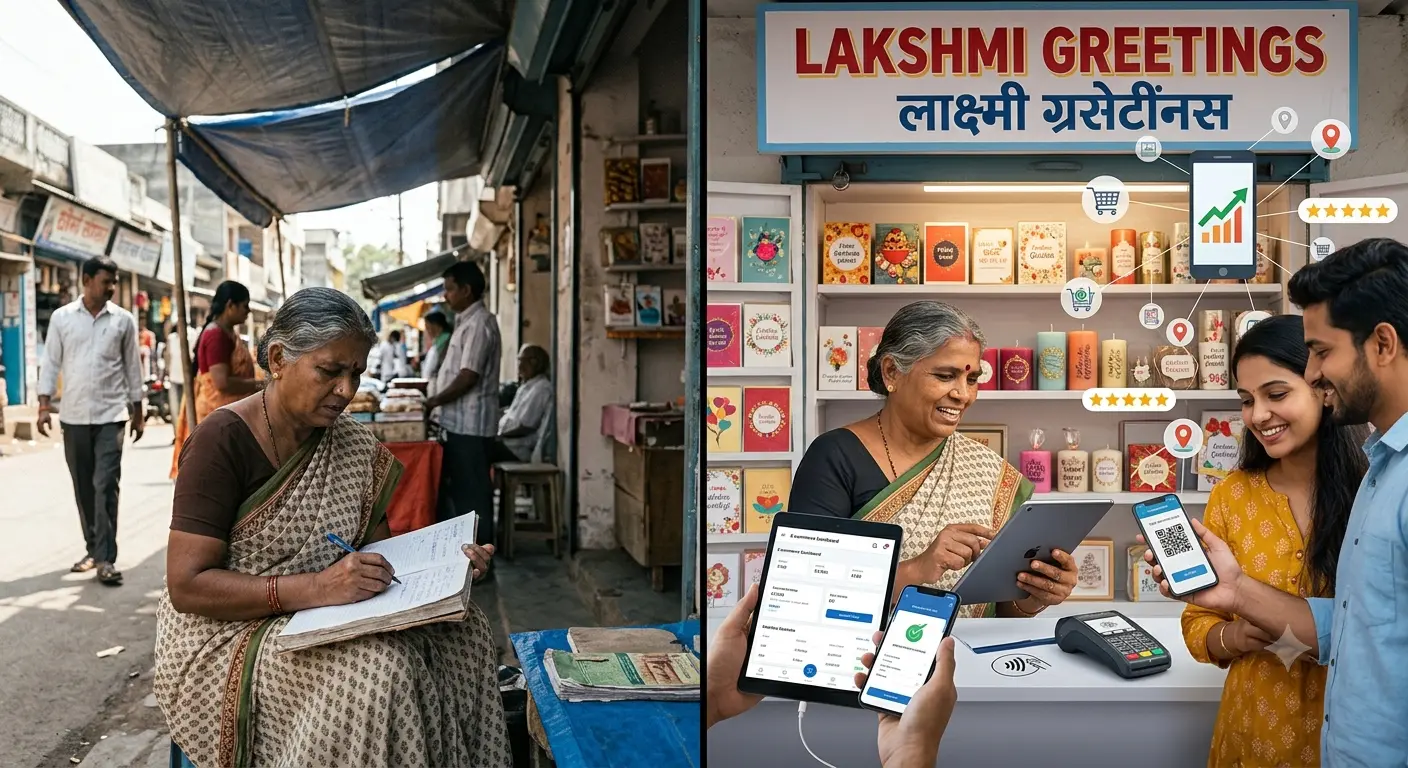
You've got a great product. Solid service. Loyal customers who swear by you. So why does it feel like nobody new is finding you?
Here's the uncomfortable truth: in 2026, if your business isn't visible online, it's invisible — full stop. Walk-ins and word-of-mouth still matter, but they're no longer enough to keep a small business growing. Your customers are searching, scrolling, and comparing before they ever call or visit. If you're not showing up in that moment, someone else is.
This is exactly why digital marketing for small business has stopped being nice to have and become the difference between businesses that grow and businesses that quietly stall out. Let's break down why that shift happened, what it actually means for you, and how to act on it without wasting money on tactics that don't fit a small business budget.
What Changed? Why 2026 Is Different
A decade ago, a business could survive on a Google listing, a Facebook page, and hope. Not anymore. Search behavior has matured — people don't just look something up, they research, compare reviews, check social proof, and often make a decision before they contact you at all.
A few shifts are driving this:
- Local search is now the first stop, not the last. Someone needing a service nearby searches on their phone, sees a handful of options, and picks based on reviews, website quality, and how quickly they can get an answer.
- AI-powered search results are increasingly summarizing answers directly, which means businesses with clear, well-structured, authoritative content get pulled into those summaries — and businesses without one get skipped entirely.
- Attention is fragmented across search, social, and marketplaces, so relying on a single channel is riskier than ever.
- Customer expectations for speed and trust are higher. A slow website, no reviews, or an inactive social profile now reads as a red flag, not a neutral fact.
None of this means small businesses need a massive budget. It means they need a deliberate strategy instead of a scattered one.
The Real Cost of Skipping Online Marketing for Small Business
Many small business owners quietly assume digital marketing is something they'll get to later. The problem is that competitors aren't waiting.
Here's what typically happens when a business delays:
- Competitors with weaker products but stronger visibility capture the customers you should be getting.
- Word-of-mouth alone caps your growth ceiling — it can't scale the way search and social can.
- Ad platforms and search rankings reward consistency; businesses that start late spend more later to catch up.
- Trust erodes when a potential customer searches your business name and finds outdated information, no reviews, or nothing at all.
The point isn't to scare you — it's to reframe the decision. Every month without a real digital presence isn't neutral; it's a month competitors get to build an advantage.
Core Pillars of Digital Marketing for Small Business
You don't need to do everything at once. But you do need to understand the full picture so you can prioritize correctly. Here's how the core pillars fit together.
1. A Website That Actually Works for You
Your website is your digital storefront — often the very first impression a potential customer forms. A slow, outdated, or non-mobile-friendly site doesn't just look unprofessional; it actively pushes visitors away before they even see what you offer.
For a small business, the website needs to do three things well: load fast, explain what you do within seconds, and make it effortless to contact you or buy.
2. Local & Organic SEO
Search Engine Optimization is how you get found by people who are already looking for what you sell — arguably the highest-intent traffic there is. For most small businesses, local SEO (Google Business Profile optimization, local keywords, reviews, local citations) delivers the fastest, most cost-effective results.
Organic SEO takes longer to build but compounds — unlike ads, the traffic doesn't stop the moment you pause spending.
3. Content Marketing
Blogs, guides, FAQs, and helpful resources do double duty: they help you rank in search, and they build trust before a customer ever talks to your sales team. This is especially powerful for service-based small businesses, where customers want to feel confident in your expertise before they commit.
4. Social Media & Reputation
Social platforms aren't just for big brands. For small businesses, they're proof of life — showing customers you're active, responsive, and trusted by real people. Reviews and reputation management matter just as much; a handful of recent, genuine reviews often influences buying decisions more than any ad.
5. Email & Retention Marketing
Getting a new customer is expensive. Keeping one is far cheaper — and email marketing remains one of the most reliable, low-cost ways to bring past customers back, especially for repeat-purchase or service-renewal businesses.
Quick-Start Framework: Where Small Businesses Should Actually Begin
If you're overwhelmed by where to start, use this priority order rather than trying to do everything simultaneously.
| Priority | Action | Why It Comes First |
|---|---|---|
| 1 | Fix/build your website | Everything else drives traffic here — it has to convert |
| 2 | Claim & optimize Google Business Profile | Fastest visibility win for local searches |
| 3 | Start collecting and responding to reviews | Builds trust that influences every other channel |
| 4 | Publish helpful, keyword-relevant content | Compounds over time, supports SEO |
| 5 | Layer in social media consistency | Reinforces trust, keeps you visible between purchases |
| 6 | Add paid ads (if budget allows) | Accelerates results once the foundation is solid |
Notice that paid ads come last, not first. Many small businesses make the mistake of running ads to a weak website or an unclaimed Google listing — that's money spent sending traffic to a leaky funnel.
Before jumping into paid campaigns, it's worth getting a professional read on where your current online presence actually stands — sometimes a simple audit reveals quick wins you're missing entirely.
Common Mistakes Small Businesses Make with Digital Marketing
- Trying every channel at once instead of mastering one or two first.
- Ignoring mobile experience, even though the majority of local searches now happen on phones.
- Inconsistent posting, which signals inactivity rather than growth.
- No tracking or measurement, so budget gets wasted on what isn't working.
- Treating SEO as a one-time task rather than an ongoing process.
- Copy-pasting competitor strategies without accounting for their budget or market position.
How to Know If Your Business Is Ready to Invest
Not every business needs a six-figure marketing budget to see results. What matters more is having a clear, honest picture of where you stand. Ask yourself:
- Can someone find my business in under 10 seconds via Google search?
- Does my website load quickly and work well on mobile?
- Do I have recent, genuine customer reviews?
- Am I publishing anything — blog posts, social updates — in the last 30 days?
- Do I know which marketing channel actually brings me customers?
If you answered no to two or more of these, that's not a failure — it's a starting point. Every business online today started exactly where you are now.
Final Word
Digital marketing for small business isn't about chasing every trend or outspending bigger competitors — it's about being deliberately visible where your customers are already looking. Start with the foundation: a website that works, a Google presence that's accurate, and content that builds trust. The businesses that treat this as a system, not a one-time task, are the ones still growing in 2026 and beyond.
If you're ready to stop guessing and build a digital marketing strategy that's actually built around your business goals, reach out to Webuthinks for a free consultation — we'll help you figure out exactly where to start.
FAQ Section
Q1: Why does a small business need digital marketing in 2026?
Because customer discovery has shifted almost entirely online — people search, compare, and read reviews before ever contacting a business. Without a digital presence, small businesses lose visibility to competitors who are easier to find.
Q2: Is digital marketing affordable for small businesses with limited budgets?
Yes. Digital marketing is scalable — you can start with high-impact, lower-cost efforts like local SEO and Google Business Profile optimization before investing in paid advertising, unlike traditional marketing which often requires large upfront spend.
Q3: What's the difference between SEO and paid ads for a small business?
SEO builds long-term, organic visibility that keeps working even after you stop actively investing in it, while paid ads deliver faster but temporary traffic that stops as soon as the budget stops. Most small businesses benefit from a mix, prioritizing SEO first.
Q4: How long does it take to see results from digital marketing?
Local SEO and Google Business Profile improvements can show results within weeks, while organic SEO and content marketing typically take a few months to build momentum. Paid ads can generate traffic almost immediately, but at an ongoing cost.
Q5: What is the single most important first step for a small business starting online marketing?
Making sure your website and Google Business Profile are accurate, fast, and mobile-friendly. This is the foundation every other marketing effort — SEO, ads, social media — depends on.
Q6: Can a small business do digital marketing without an agency?
Yes, in the early stages — many owners manage their own Google Business Profile and social media. However, as competition increases, working with a specialized agency often accelerates results and avoids costly trial-and-error.